Match the Size! Worksheet
EcoExposure Kids · Teaching sizes for plastic fragments and everyday objects
Illustration, not to scale. Sizes are teaching values.
1. Plastic fragment: Polymer cluster — 1 nm
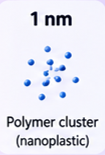
Illustration, not to scale.
Which everyday object is closest in size?
- A.
 Human hair (Illustration, not to scale.)
- B.
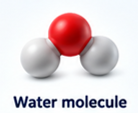 Water molecule (Illustration, not to scale.)
- C.
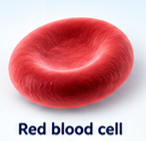 Red blood cell (Illustration, not to scale.)
- A.
2. Plastic fragment: Nanosphere — 10 nm
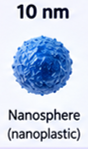
Illustration, not to scale.
Which everyday object is closest in size?
- A.
 Virus (Illustration, not to scale.)
- B.
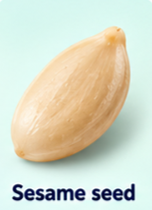 Sesame seed (Illustration, not to scale.)
- C.Water molecule (Illustration, not to scale.)
- A.
3. Plastic fragment: Nanosheet — 50 nm
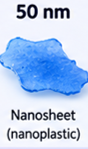
Illustration, not to scale.
Which everyday object is closest in size?
- A.Sesame seed (Illustration, not to scale.)
- B.Virus (Illustration, not to scale.)
- C.
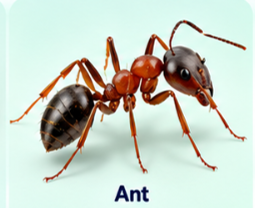 Ant (Illustration, not to scale.)
- A.
4. Plastic fragment: Nanofragment — 100 nm
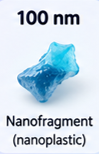
Illustration, not to scale.
Which everyday object is closest in size?
- A.Ant (Illustration, not to scale.)
- B.Virus (Illustration, not to scale.)
- C.Sesame seed (Illustration, not to scale.)
- A.
5. Plastic fragment: Nanofiber — 500 nm
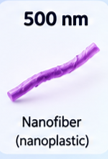
Illustration, not to scale.
Which everyday object is closest in size?
- A.Human hair (Illustration, not to scale.)
- B.
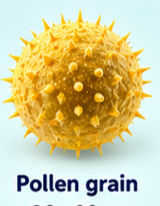 Pollen grain (Illustration, not to scale.)
- C.
 Bacterium (Illustration, not to scale.)
- A.
6. Plastic fragment: Fine microfragment — 1 µm
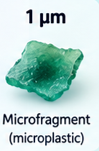
Illustration, not to scale.
Which everyday object is closest in size?
- A.Water molecule (Illustration, not to scale.)
- B.Bacterium (Illustration, not to scale.)
- C.
 Grain of sand (Illustration, not to scale.)
- A.
7. Plastic fragment: Microbead — 10 µm
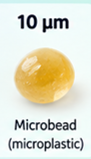
Illustration, not to scale.
Which everyday object is closest in size?
- A.Red blood cell (Illustration, not to scale.)
- B.
 Grain of table salt (Illustration, not to scale.)
- C.
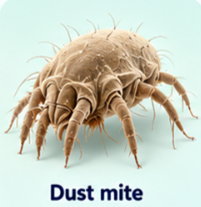 Dust mite (Illustration, not to scale.)
- A.
8. Plastic fragment: Microfiber — 50 µm
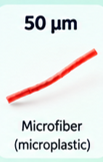
Illustration, not to scale.
Which everyday object is closest in size?
- A.Sesame seed (Illustration, not to scale.)
- B.Human hair (Illustration, not to scale.)
- C.Virus (Illustration, not to scale.)
- A.
9. Plastic fragment: Coarse microfragment — 100 µm
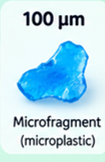
Illustration, not to scale.
Which everyday object is closest in size?
- A.Human hair (Illustration, not to scale.)
- B.Bacterium (Illustration, not to scale.)
- C.Virus (Illustration, not to scale.)
- A.
10. Plastic fragment: Foam fragment — 500 µm
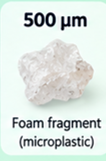
Illustration, not to scale.
Which everyday object is closest in size?
- A.Grain of sand (Illustration, not to scale.)
- B.Red blood cell (Illustration, not to scale.)
- C.Pollen grain (Illustration, not to scale.)
- A.
11. Plastic fragment: Larger fragment — 1 mm
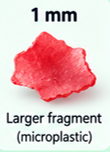
Illustration, not to scale.
Which everyday object is closest in size?
- A.Red blood cell (Illustration, not to scale.)
- B.Water molecule (Illustration, not to scale.)
- C.Grain of sand (Illustration, not to scale.)
- A.
Research challenge
Name an everyday object, estimate its size, and give a source. No name or email needed.
Object: _______________________________
Estimated size: _______________ unit: _______
Source (link or book): _______________________________
Note: _________________________________________________